
Jolt
On sale
18th August 2026
Price: £16.99
In the tradition of Susannah Cahalan’s Brain on Fire and Terri White’s Coming Undone, an intimate and universal memoir of electroconvulsive therapy (ECT) – by the celebrated Smithsonian editor, memoirist, and essayist.
Before I can tell you about the shock treatment, I should tell you about the horse tranquilizer.
Ted Scheinman has struggled with depression through his whole life, and gone to great lengths in his search for relief. As antidepressants prove less and less effective, he turned to the powerful sedative ketamine to no avail. When his mental health continues to deteriorate, taking his relationships and quality of life with it, only one terrifying medical option remains: electroconvulsive therapy.
Like most people, Ted felt a shiver down his spine. ECT occupies a unique place in our cultural memory, with patients famously subjected to it against their will and horrifying images of it frequently appearing on our screen. Some can scarcely imagine anything worse; some would prefer to die. For Ted there is an even bigger concern beyond the fear and the pain: if this doesn’t work, there’s nothing else left to try.
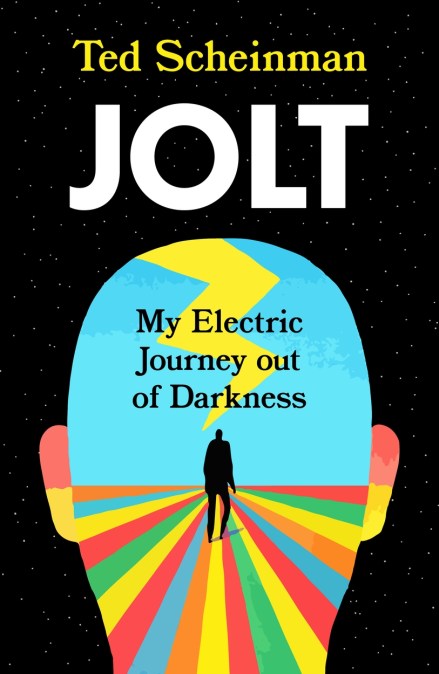
Jolt follows Ted’s descent into and emergence from major depression as he undergoes ECT. Along this journey, he investigates the medical history of this most controversial of treatment to answer one pressing question: if ECT is so horrific, why do doctors continue to recommend it today? He discovers that as well as crediting it with saving his own life, it is considered responsible for saving tens of thousands of lives each year.
Jolt is beautiful, funny, philosophical and ultimately hopeful memoir about what we’re willing to sacrifice to have a chance at life.
Before I can tell you about the shock treatment, I should tell you about the horse tranquilizer.
Ted Scheinman has struggled with depression through his whole life, and gone to great lengths in his search for relief. As antidepressants prove less and less effective, he turned to the powerful sedative ketamine to no avail. When his mental health continues to deteriorate, taking his relationships and quality of life with it, only one terrifying medical option remains: electroconvulsive therapy.
Like most people, Ted felt a shiver down his spine. ECT occupies a unique place in our cultural memory, with patients famously subjected to it against their will and horrifying images of it frequently appearing on our screen. Some can scarcely imagine anything worse; some would prefer to die. For Ted there is an even bigger concern beyond the fear and the pain: if this doesn’t work, there’s nothing else left to try.
Jolt follows Ted’s descent into and emergence from major depression as he undergoes ECT. Along this journey, he investigates the medical history of this most controversial of treatment to answer one pressing question: if ECT is so horrific, why do doctors continue to recommend it today? He discovers that as well as crediting it with saving his own life, it is considered responsible for saving tens of thousands of lives each year.
Jolt is beautiful, funny, philosophical and ultimately hopeful memoir about what we’re willing to sacrifice to have a chance at life.